Are you struggling with understanding box and whisker plots in your math class? Don’t worry, we’ve got you covered! Box and whisker plots, also known as box plots, are a visual representation of data that can help you analyze the distribution of a set of values.
These plots are great for comparing data sets and identifying outliers, making them a valuable tool for anyone working with statistics. If you find yourself getting confused by box and whisker plots, don’t fret – we’re here to help you break it down!
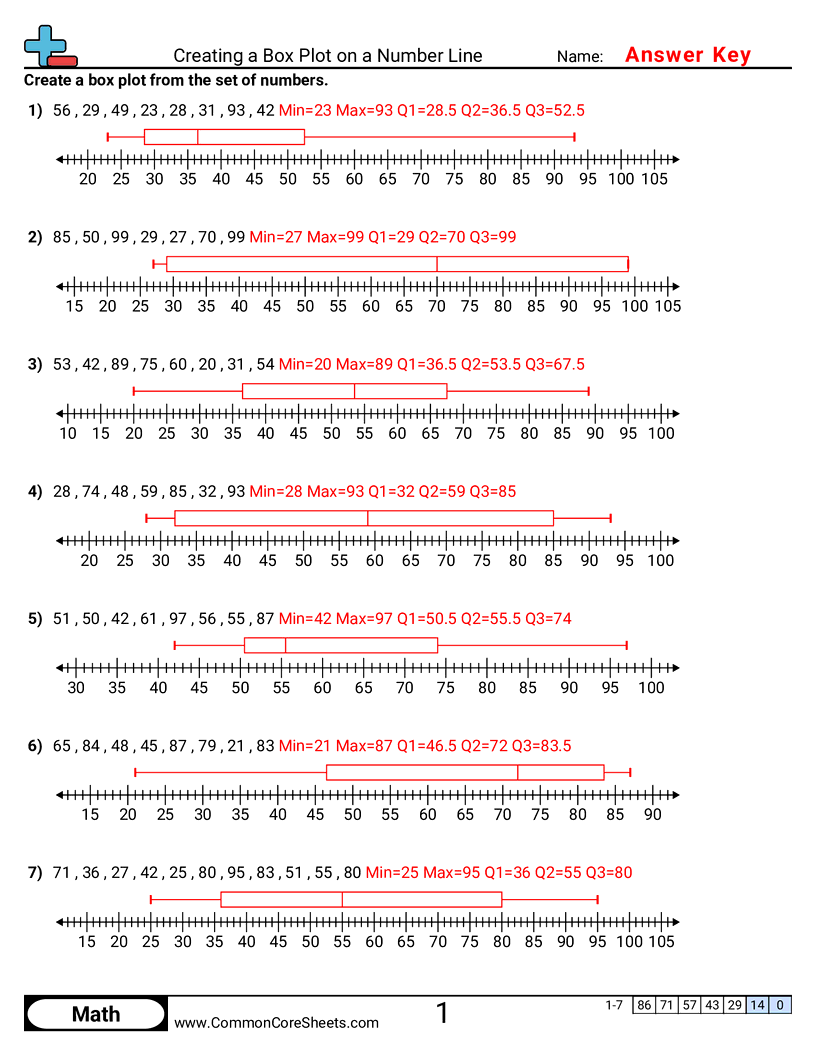
worksheet box and whisker plots
Exploring the Basics of Box and Whisker Plots
Box and whisker plots consist of a box that represents the interquartile range (the middle 50% of the data), with a line inside the box indicating the median. The “whiskers” extend from the box to the minimum and maximum values, excluding outliers.
By looking at a box and whisker plot, you can easily see the spread of the data, the center, and any outliers. This visual representation allows you to quickly interpret the data without having to sift through long lists of numbers.
Next time you encounter box and whisker plots in your homework or exams, remember to focus on the box’s length, the position of the median, and any outliers that may be present. With a little practice, you’ll be a pro at interpreting these plots in no time!
So, don’t let box and whisker plots intimidate you. With a solid understanding of the basics, you’ll be able to tackle any data set with confidence. Keep practicing, and soon you’ll be breezing through your math assignments like a pro!
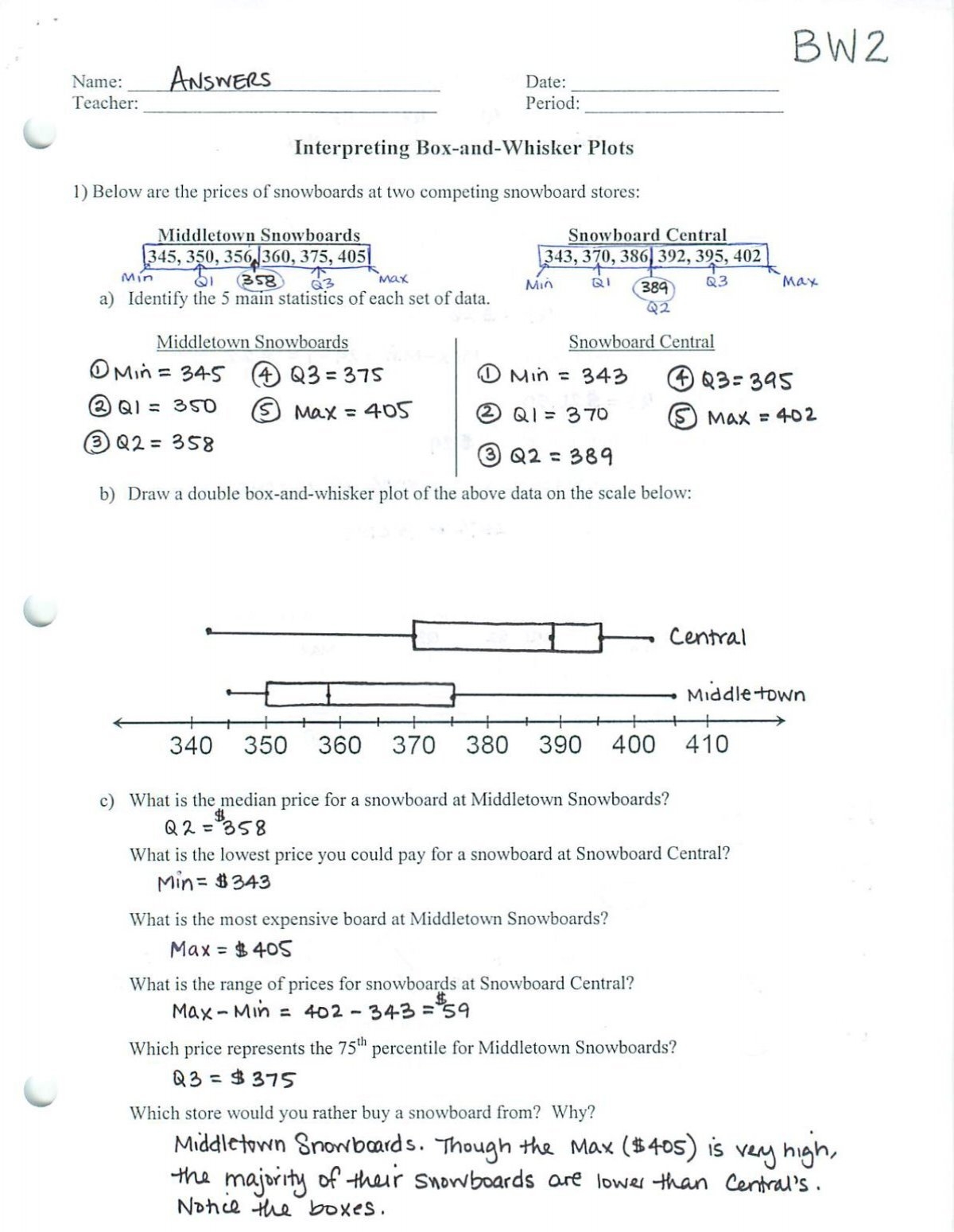
Interpreting Box And Whisker Plots Worksheet BW2
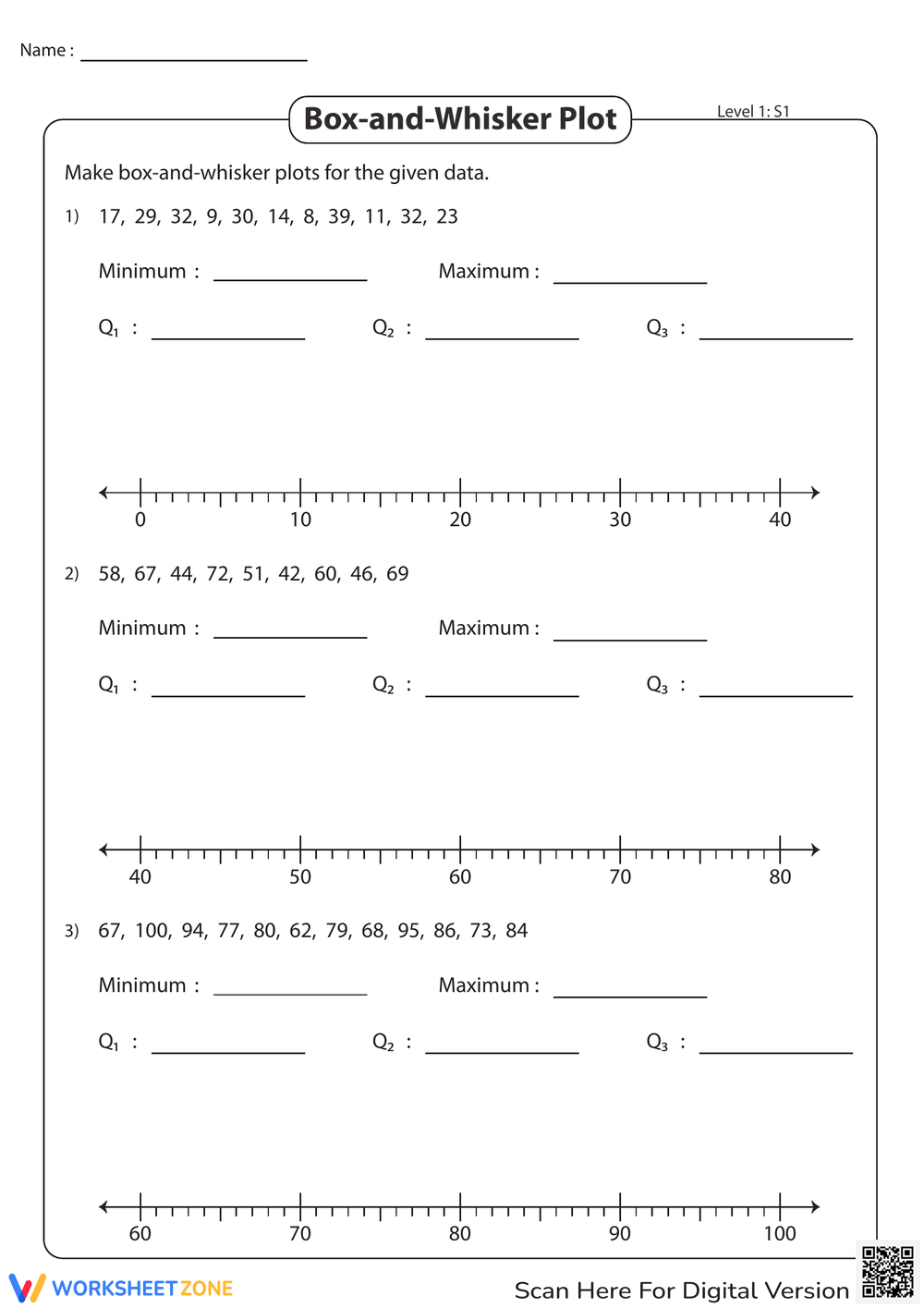
Grade 6 Box Plots Worksheets Printable
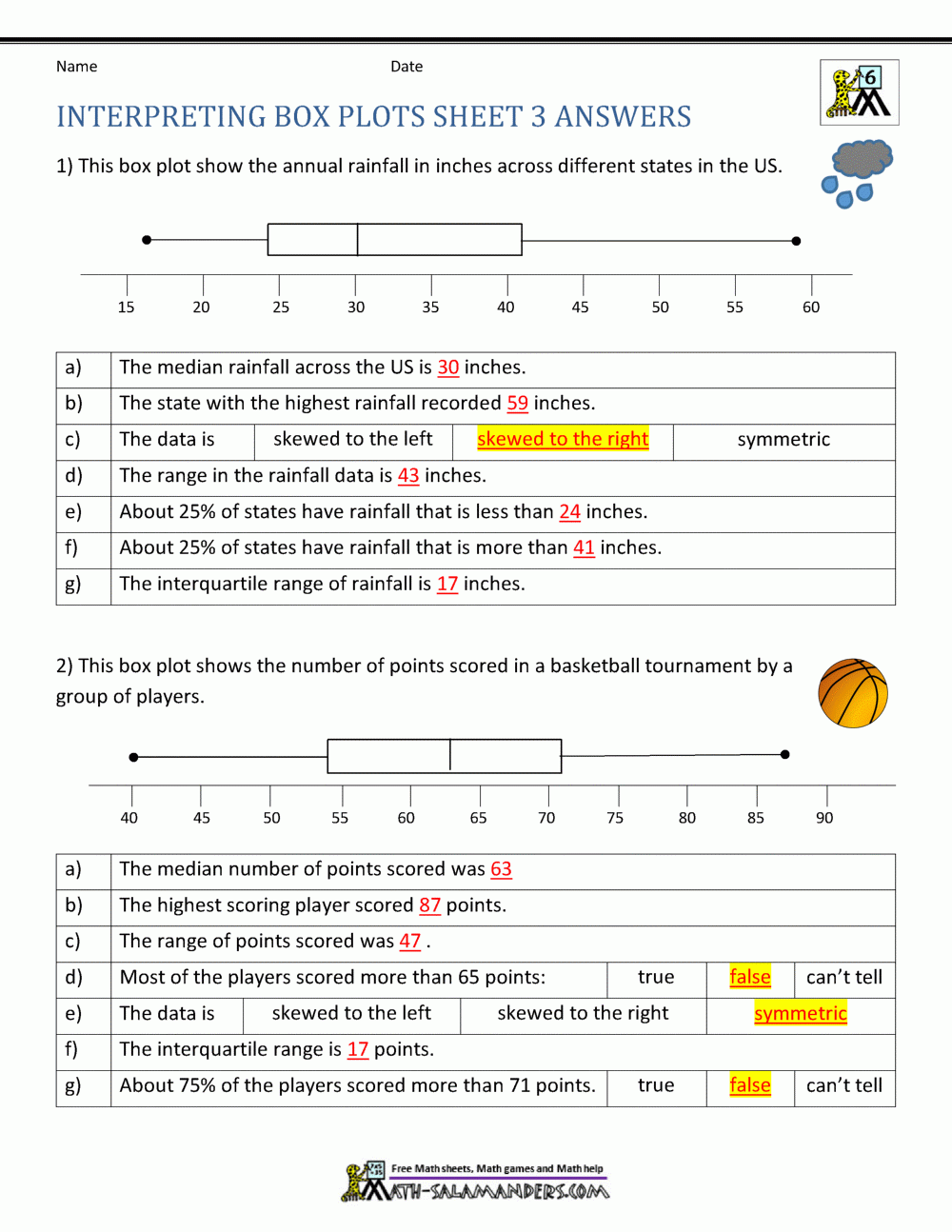
Box Plot Worksheets
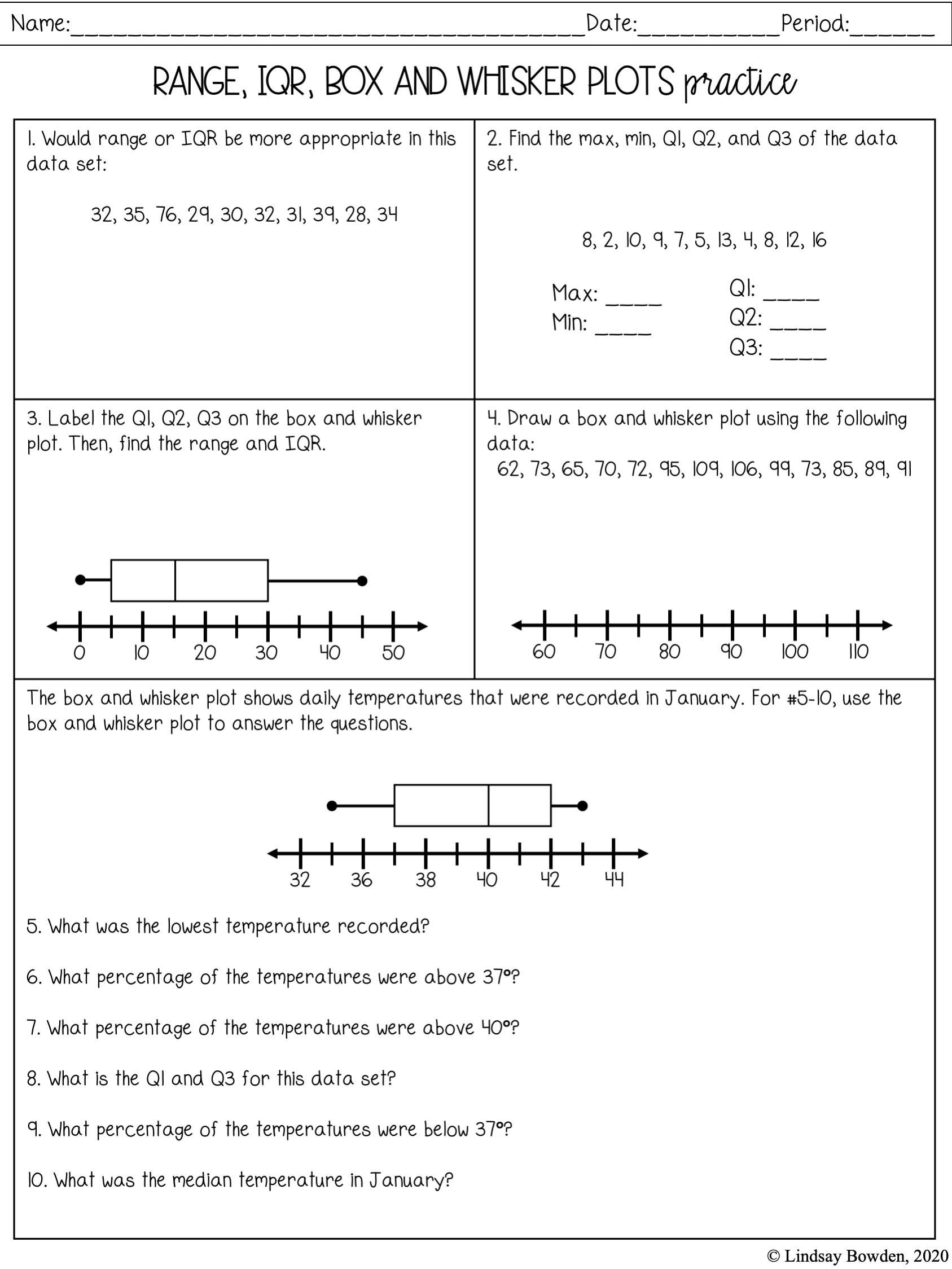
Box And Whisker Plots Guided Notes And Worksheets 7th 10th Grade Algebra Lindsay Bowden